Anionic surfactants are one of the most important types of surfactants, and are widely used in various industries, such as detergents, cosmetics, textiles, and agriculture. With their affordable prices, excellent cleaning ability, and excellent foaming properties, these surfactants account for more than 50% of the global market.
Structure and chemical properties
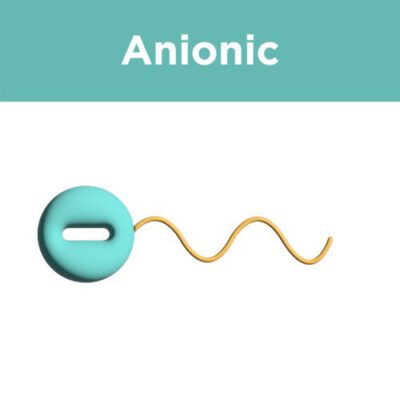
Anionic surfactants have a hydrophobic part and a hydrophilic part with a negative charge. This composition allows them to:
The most important types of anionic surfactants:
-
Sulfonate (as dodecyl benzene sodium sulfonate – LAS)
-
Sulfates (such as sodium lauryl ether sulfate – SLES)
-
Carboxylates (such as soap)
-
Phosphates (e.g. alkyl ether phosphate)
Benefits of anionic surfactants
-
High cleaning power: Particularly effective in removing grease and organic contaminants.
-
Reasonable price compared to other surfactants.
-
It produces a rich and stable foam.
-
Good solubility in water
-
Compatibility with various extensions
Disadvantages and limitations
-
Sensitivity to water hardness: Formation of calcium and magnesium ion deposits.
-
Skin and eyes irritation is relatively great.
-
Biodegradability varies depending on the type of compound.
Industrial Applications
1. Detergent Industry
-
Laundry detergent (30-50% of ingredients)
-
Dishwashing Liquid
-
Shampoo & Bath Products
2. Cosmetics and health products industry
-
toothpaste
-
Shaving foam
-
Skincare Products
3. Textile Industry
-
Auxiliary Materials in the Dyeing Process
-
Fabric Softener
4. Agriculture
-
Pesticide and Fertilizer Additives
-
Moisturizing Agent
5. Oil Industry
-
Additives for drilling fluids
-
Improved Oil Recovery
Safety and Environmental Tips
-
Some types of aniontes, such as LAS, are highly biodegradable.
-
High concentrations can be toxic to aquatic life.
-
In many countries, its use is subject to environmental regulations.
Future and New Developments
-
Development of new varieties with improved biodegradability
-
It is combined with other surfactant active substances to reduce irritation.
-
It is produced from renewable and plant sources.
Conclusion
Despite their limitations, anionic surfactants are still a key pillar in the detergent and cosmetic industries. Recent research has focused on improving the environmental performance of these compounds and reducing the likelihood of irritation. As new production technologies develop, future generations of these surfactants are expected to have higher performance and better environmental compatibility.