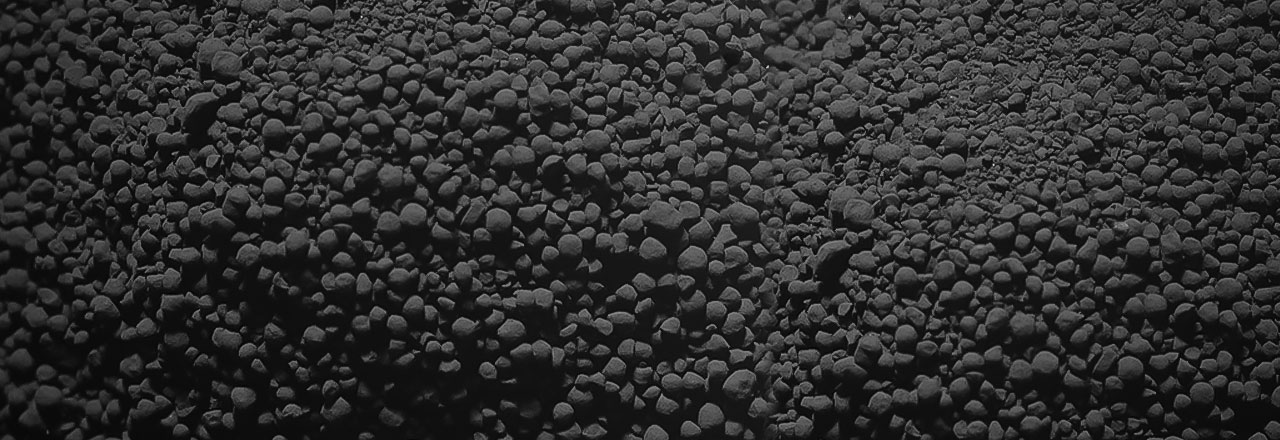
Carbon black , also known as industrial black, is an important component in many industries. Despite its plain appearance and dull color, it plays a key role in the manufacture of complex products. This black, powdery substance is amorphous carbon , produced by the incomplete combustion of hydrocarbons. Carbon black is widely used in the manufacture of automobile tires, plastics, coatings, printing inks, cables, and even electronic devices
, and global demand is increasing year after year.
Determination of industrial smoke (black carbon)
Industrial soot is a fine, lightweight powder composed of tiny carbon particles. These particles are typically between 10 and 500 nanometers in size and have a very large surface area. Its chemical composition consists primarily of carbon, but also contains small amounts of hydrogen, oxygen, and volatile compounds.
Unlike graphite or coal, carbon black has an amorphous structure composed of interconnected spherical particles (chains or clusters). This structure determines its unique properties, such as electrical conductivity, corrosion resistance, and deep black color .
History of industrial production of soot
Carbon black has been used for centuries to make black inks and paints. However, its industrial production only began in the early 20th century, when the tire industry was looking for a suitable additive to increase rubber strength.
In 1912, American companies developed the “carbon black furnace” process, which enabled large-scale and controlled production of carbon black. Since then, industrial carbon black production has been an integral part of the petrochemical and coal industries.
How to make soot
Soot is typically produced by the incomplete combustion or pyrolysis of hydrocarbons (such as heavy oil, asphalt, or natural gas). There are several main methods for its production:
1. Oven blackening process
This is the most common and cost-effective production method. A special industrial oil (raw material) is burned in an oxygen-poor atmosphere at high temperatures (approximately 1300–1500 °C).
The soot particles are suspended in the hot gases and then collected by a rapid cooling system and bag filter.
This method allows for precise control of particle size and structure.
2. Thermal process (thermal cracking process)
In this process, natural gas decomposes at high temperatures in the absence of oxygen. The resulting product has a dense consistency and a low surface area. This type of soot is often used in specialized applications, such as the electrical industry.
3. Black acetylene process
In this process, acetylene (C₂H₂) decomposes in the absence of oxygen. The resulting soot is a good conductor of electricity and can be used to manufacture batteries, electrodes, and electrically conductive devices.
4. Black channel method
This combustion method was once popular but has since been abandoned due to high levels of pollution and low efficiency. It involves burning a natural gas flame near a metal plate, producing soot.
Structure and physical properties
Soot particles consist of very small spheres linked together in chains. These chains are called aggregates. The size and shape of these aggregates significantly influence the physical properties of the soot.
The most important physical properties of industrial dust:
| Special feature | Explained |
|---|---|
| granules | from 10 to 500 nanometers |
| Private Level (BET) | from 30 to 1500 m²/year |
| Color | glossy to matt black |
| Bulk density | About 0.3 to 0.6 g/cm3 |
| conductivity | High temperatures, especially black acetylene types |
| Oil absorption (DBP) | Particle structure and porosity indicators |
Industrial smoke applications
Carbon black is used in numerous industries and is a component of many everyday products . The most important applications include:
1. Rubber and tire industry
Over 70% of the carbon black produced worldwide is used in the rubber industry. Adding approximately 20–30% carbon black to natural or synthetic rubber significantly increases its wear resistance and mechanical strength .
2. Paint and varnish industry
Carbon black is used as a pigment in paints, printing inks, automotive coatings, and plastics . It produces rich, long-lasting colors that are light- and heat-resistant.
3. Plastics industry
In plastics, carbon black not only imparts color but also acts as a UV stabilizer . Its presence extends the lifespan of plastic products outdoors.
4. Electrical and electronic equipment
A special type of highly conductive carbon black is used in cables, batteries, touchscreens, and antistatic materials.
5. Chemical and pharmaceutical industry
In some special applications it is used as a catalyst support or adsorbent in cleaning processes.
Advantages and outstanding features
-
Increasing the strength and mechanical stability of tires.
-
Produces a uniform black color with high opacity.
-
Improved thermal stability and UV resistance .
-
High conductivity for special applications
-
Excellent absorption properties of gases and organic compounds.
Environmental and safety aspects
Industrial smoke is produced by the combustion of hydrocarbons . Therefore, natural pollutant emissions such as carbon dioxide, carbon monoxide, and particulate matter are normal. Modern factories use filtration systems such as air purifiers, air filters , and waste heat recovery systems
to reduce pollution. When working with smoke, wear a mask and gloves and ensure good ventilation to avoid inhaling particulate matter.

Global markets and production
According to industry statistics, global carbon black production exceeds 14 million tons annually . The largest producers and consumers of this material are China, India, the United States, and Russia. Iran also has several large carbon black production facilities that use heavy petrochemical feedstocks to meet the needs of the country’s rubber and plastics industries. The growth of the automotive and tire industries has also led to increased domestic demand for carbon black.
Quality control and specifications
In the manufacturing industry, the quality of industrial powders is assessed according to the following criteria:
-
Surface area (BET) – Specific surface area
-
Absorption index and structure of DBP
-
Particle size distribution
-
The ash content is the percentage of ash
-
Volatile materials
International standards such as ASTM D1765 and ISO 3521 are used to classify carbon black types .
Jacobi CS water-absorbing material
Finally
Carbon black, also known as industrial black, is a strategic resource for modern industry. This seemingly simple black powder possesses immense technological value. Its unique properties are utilized in a wide variety of applications, from tires and paints to plastics and cables. With the development of new technologies and growing environmental awareness, the production and use of carbon black are evolving
toward more efficient, environmentally friendly, and environmentally friendly methods.
Simply put, soot is the most important black material in industry . Without it, many modern products would be unthinkable.