Surfactants are compounds that reduce the surface tension between two phases (e.g., water and oil), thereby facilitating processes such as emulsification, cleaning, and wetting. They are generally classified into four categories: ionic (cationic, anionic, and amphoteric) and nonionic surfactants . This article discusses cationic surfactants , including their chemical structure, functions, and diverse applications in various industries.
What are cationic surfactants?
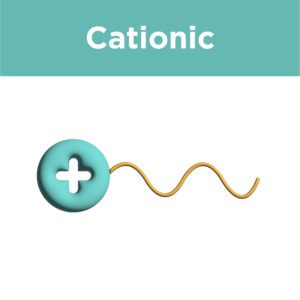
Cationic surfactants are a class of surfactants that dissociate into positive ions (cations) and negative ions in aqueous solutions . This positive charge gives them unique advantages in certain applications, such as disinfectants and fabric softeners.
Chemical composition
Cationic surfactants typically consist of a positively charged hydrophilic head (usually a quaternary ammonium nitrogen or phosphorus molecule) and a hydrophobic hydrocarbon tail . The most important types include:
-
Quaternary ammonium compounds (quaternary ammonium salts) such as benzalkonium chloride (BAC) and hexadecyltrimethylammonium bromide (CTAB).
-
Primary amines, secondary amines and tertiary amines (at low pH they accept protons and become cations).
-
Phosphonium and cationic sulfonium (less common)
Properties of cationic surfactants
-
Positive charge: Attracts negatively charged surfaces such as bacteria , skin, and hair.
-
Antibacterial properties: Many of these compounds (such as quaternary ammonium salts) are used in disinfectants .
-
Fabric softener: used in laundry and hair conditioners .
-
Stability of water hardness: Compared to anionic surfactants, it is less susceptible to attack by calcium and magnesium ions.
-
Low foaming: Suitable for systems where excessive foaming is undesirable.
Application of cationic surfactants
1. Disinfectants and bactericides
-
Hospitals and healthcare: Quaternary ammonium compounds (such as benzalkonium chloride) are used in surface and hand disinfectants .
-
Hygiene products : Disinfectant for mouth and nose.
2. Production of detergents and fabric softeners.
-
Fabric softener: The positive charge of these surfactants is attracted to the negatively charged fibers of the fabric, resulting in a softening effect.
-
Shampoo and conditioner: They reduce static electricity and make the hair smoother.
3. Cosmetics and medical industry
-
Creams and lotions: are used as emulsifiers and moisturizers.
-
Hair care products: These include conditioners and masks to strengthen the hair.
4. Agricultural industry
-
Increased absorption rate of herbicides and pesticides: as an auxiliary substance in pesticide preparations.
5. Oil and gas industry
-
Corrosion and biofilm protection: Used in drilling fluids to prevent bacterial growth.
6. Paper and textile industry
-
Avoiding static electricity build-up during the processing of synthetic fibers.
Advantages of cationic surfactants compared to other surfactant types.
 Pronounced antibacterial properties: Outperforms both anionic and nonionic surfactants. Especially gentle: suitable for textiles and hair. Good chemical stability: effective in acidic and alkaline environments. Low foaming: suitable for industrial systems with high foaming capacity.
Disadvantages and limitations
-
More toxic than non-ionic surfactants: can cause skin irritation and environmental damage.
-
Incompatible with anionic surfactants , as the opposite charges neutralize each other.
-
High production costs compared to anionic surfactants .
Summary and Conclusion
Due to their positive charge and unique properties, cationic surfactants are widely used in disinfectants, fabric softeners for textiles and hair, agriculture, and the petroleum industry . Despite their high toxicity and some compatibility issues, they remain the first choice for applications requiring antibacterial and softening properties. Advances in the synthesis of new cationic compounds have made their use safer and more effective in recent years.