Introduction: Large-scale exploration of the fullerene field
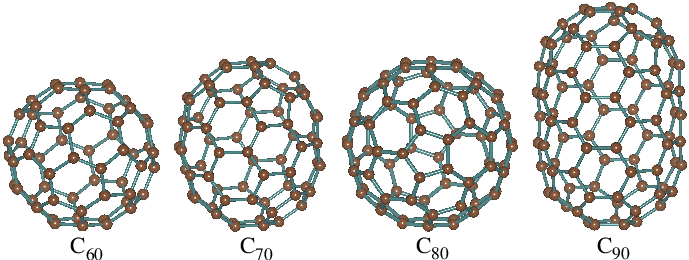
The carbon molecule C84 occupies a special position within the fullerene family . It consists of 84 carbon atoms and possesses a more complex and extensive structure than C60, the best-known member of this family. However, the advantages of C84 are not limited to its unique structure; its special electronic properties have also attracted the interest of nanotechnologists, chemists, and physicists.
Molecular structure: complex carbon structure.
The C84 architecture has a number of important features:
-
Structural composition : contains 12 pentagons and 32 hexagons (according to Euler’s theory).
-
Molecule size : approximately 0.9–1 nanometer in diameter.
-
Isomers : There are at least 24 possible isomers, mainly in two forms: D2 and D2d.
-
Internal volume : sufficient space to accommodate atoms or small molecules.
The structure of C84 allows it to act as a natural “nanolayer” and to absorb other molecules.
Production methods: Complexity of composition
Fullerene C84 is usually obtained in combination with other fullerenes:
-
Arc discharge : a basic process using graphite electrodes in a helium atmosphere.
-
Controlled combustion : Combustion of aromatic hydrocarbons with a precisely defined oxygen ratio.
-
High-frequency plasma : a relatively effective alternative.
Cleaning a C84 requires complex steps:
-
Extraction with aromatic solvents
-
Multi-stage column chromatography
-
Crystallization of particles
-
Electrical separation of isomers
Physical and chemical properties
Physical properties:
-
Physical state: Black powder
-
Solution color: yellowish-brown
-
Decomposition temperature: 400-450 degrees Celsius.
-
Molecular weight: 1008.96 g/mol
-
Solubility: limited in organic solvents.
Chemical properties:
-
Not as stable as C60 and C70.
-
Can hold up to 10 electrons .
-
Selective response under certain conditions
-
Ability to form large-scale complexes
Promising applications
1. Molecular electronics:
-
Nanostorage
-
molecular key
2. Supply of pharmaceutical products and medicines:
-
Targeted drug delivery system
-
Contrast factors in photography
-
Application of photodynamic therapy
3. Energy storage:
-
Improving the performance of lithium-ion batteries
4. Motivation:
-
Heterogeneous catalysts
-
Applications of fuel cells
5. Materials Science:
-
Reinforcement of composite materials
-
Improved protective layer
Problems and limitations
The use of C84 is associated with a number of hurdles:
-
Decline in production efficiency
-
High cleaning costs
-
The problem of isomer separation
-
Information on toxicity is limited.

New research findings and future perspectives
Current research areas include:
-
Development of efficient installation methods
-
Explore the interaction between hosts and guests.
-
Applications in quantum computing
-
Development of molecular sensors
-
Surface treatment for performance enhancement
Summary: A look into the future of nanotechnology
Fullerenes C84 are characterized by a complex structure and unique properties, making them promising candidates for future applications . Although their production and use still present numerous challenges, this carbon nanostructure holds enormous potential in various fields such as medicine and energy storage, and is therefore the subject of intensive future research.
Thanks to improved, controlled synthesis methods and a deeper understanding of its molecular properties, C84 is expected to play a significant role in the development of next-generation nanotechnology. Current research suggests that this fullerene could find applications in specialized fields and advanced technologies in the future.