- Be sure to wear gloves, appropriate clothing, and a mask when working with this product.
- Change clothes and shoes immediately if they become contaminated.
- If activated charcoal comes into contact with skin, eyes, or any part of the body, wash the affected area with water and see a doctor.
- Avoid swallowing or inhaling these chemicals.
Download MSDS of activated carbon
MSDS .pdf
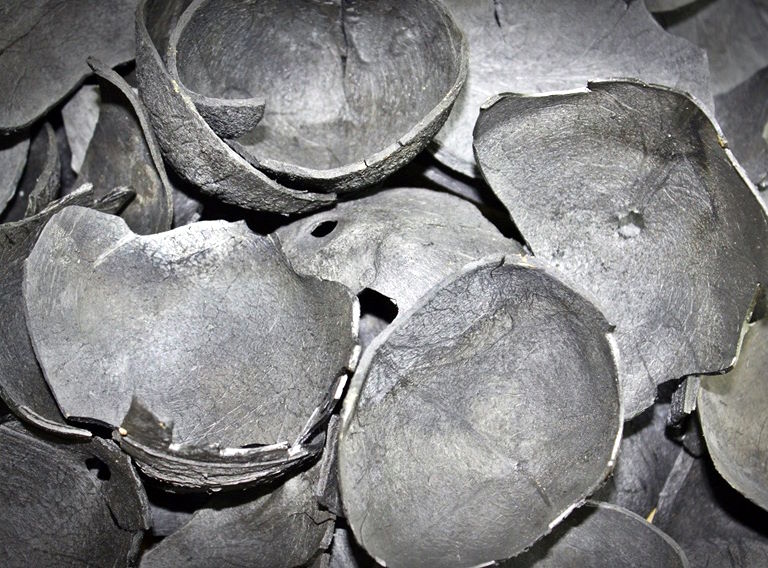
Safety tips related to activated carbon
Introduction
Activated carbon has a high ability to adsorb pollutants and impurities due to its highly porous structure and large specific surface area. However, improper use of activated carbon can lead to safety problems for users. Hence, it is very essential to observe safety precautions while working with this material.
Safety tips in transportation
Proper packaging
Activated carbon should be stored in suitable, moisture- and air-resistant packaging. The packaging should be such that it prevents any contamination or moisture from entering. The packaging should also have appropriate warning signs to indicate potential hazards.
Safe transportation
When moving packages containing activated carbon, appropriate handling equipment such as a forklift or hand truck should be used. Direct contact with the activated carbon packages should be avoided and appropriate gloves should be worn.
Safety tips in warehousing
Store in a cool, dry place.
Activated carbon should be stored in a cool, dry place to prevent it from absorbing moisture and reducing its effectiveness. Activated carbon packets should also not be placed near flammable chemicals.
Proper ventilation
Activated carbon storage areas should have adequate ventilation systems to prevent the accumulation and release of harmful gases. Proper ventilation helps reduce the risks of breathing harmful gases.
Safety tips for use
Use of personal protective equipment
Personal protective equipment such as gloves , masks, safety glasses, and protective clothing should be worn when working with activated carbon . This equipment helps reduce direct contact with activated carbon and prevent its particles from entering the respiratory tract.
Avoid breathing dust.
Activated carbon can generate dust due to its porous structure. Breathing activated carbon dust can lead to respiratory problems. Therefore, appropriate masks should be used to prevent breathing the dust.
Caution in transporting absorbed fluids
Activated carbon, due to its high adsorption capacity, can absorb various liquids. These liquids may contain hazardous chemicals. Therefore, care should be taken in the transportation and disposal of saturated activated carbon and direct contact should be avoided.
Proper disposal of saturated activated carbon
Saturated activated carbon must be disposed of properly and in accordance with environmental regulations. It should be transported to hazardous chemical disposal centers and its release into the environment should be avoided.
Safety tips in various industries
Chemical industry
In the chemical industry, activated carbon is used for the separation and purification of chemicals. In these environments, appropriate personal protective equipment should be used and direct contact with activated carbon should be avoided. Adequate ventilation should also be ensured to reduce respiratory hazards.
Pharmaceutical industries
In the pharmaceutical industry, activated carbon is used to purify pharmaceuticals. In these environments, appropriate personal protective equipment should be used and direct contact with activated carbon should be avoided. It is also necessary to ensure proper disposal of saturated activated carbon.
Water purification
In water purification, activated carbon is used to remove contaminants and impurities. In these environments, appropriate personal protective equipment should be used and direct contact with activated carbon should be avoided. It is also necessary to ensure proper disposal of saturated activated carbon.
Air purification
In air purification systems, activated carbon is used to absorb polluting gases and harmful chemicals. In these environments, appropriate personal protective equipment should be used and direct contact with activated carbon should be avoided. Adequate ventilation should also be ensured to reduce respiratory hazards.
Safety tips in laboratories
Use of chemical hoods
In laboratories, chemical hoods should be used when working with activated carbon to prevent the release of dust and harmful gases. These hoods help absorb and exhaust suspended particles and harmful gases.
Compliance with safety regulations
When working with activated carbon in laboratories, safety regulations and work instructions must be followed. These regulations include the use of personal protective equipment, adequate ventilation, and proper disposal of chemicals.
Conclusion
Activated carbon is widely used in various industries due to its unique properties. However, improper use of this material can pose serious safety risks. Following safety precautions in the transportation, storage, use, and disposal of activated carbon helps reduce risks and increase safety. Given the importance of these precautions, appropriate personal protective equipment should always be used and safety regulations should be observed.
Section 1 – Identity
Identity (as used on label and listing): GC Activated Carbon (including, but not limited to GC C-40, GC 4 x 8B, GC 4 x 8S, GC 6 x 12, GC 6 x 12S, GC 8 x 30, GC 8 x 30AW, GC 8 x 30S, GC 8 x 30SAW, GC 12 x 40, GC 12 x 40AW, GC 12x40SAW, GC 20 x 50, GC 20 x 50S, GC Powdered, GC WDC Activated)
Manufacturer’s name:
General Carbon Corporation
33 Paterson Street
Paterson, NJ 07501
Tel: (973)523-2223
www.generalcarbon.com
Date of preparation: February 16, 2017
Section 2 – Hazardous Identification
2.1 GHS-US Classification
Eye Irritation 2B H320
STOT SE 3 H335
Hazards not otherwise classified : Combustible dust. May form combustible dust concentrations in air. All powdered activated carbons are classified as weakly explosive (dust explosion class St1): given the necessary conditions of a strong ignition source, a suitable concentration of carbon dust in the air, sufficient oxygen levels and confinement, there is the potential for a deflagration event. A combustible dust risk assessment and staff training should be carried out. See sections 7 and 9 for further information on combustible dust precautions.
2.2
Hazard pictograms Label elements
Signal Word (GHS-US):
Hazard Statements: H320- Causes eye irritation
: H335- May cause respiratory irritation
Precautionary Statements (GHS-US)
: P261- Avoid breathing dust
: P264- Wash thoroughly after handling
: P271- Use in well-ventilated areas
: P280- Wear gloves/clothing/eye/face protection
: P304&340: EDHAL: IF person IF into fresh air
: P305&351&P338: IF IN EYES, rinse cautiously with water for several minutes. Continue rinsing, if possible. If contact lenses are present and easy to do.
: P312- Call a POISON CENTER/doctor if you feel unwell
: P403 & P233- Store in a well-ventilated place. Keep container tightly closed
: P405- Keep container closed
: P501- Dispose of container to appropriate container
2.3 Other hazards
No additional information available.
2.4 Acute toxicity unknown (GHS-US)
No information available.
Section 3: Composition/information on ingredients
3.1 Materials
cannot be used
3.2
Mixture Name CAS # % Classification GHS_US
Carbon 7440-44-0 100 Not classified
Section 4 – First Aid Measures
4.1 Description of First Aid Measures
First Aid After Inhalation: Move person to fresh air. If not breathing, perform CPR or artificial respiration. Get medical attention immediately.
First aid after skin contact: If redness or irritation occurs, seek medical attention.
First aid after eye contact: Immediately flush eyes with plenty of water for at least 15 minutes. If irritation persists, seek medical attention.
First aid after ingestion: If swallowed, seek immediate medical attention or advice. Do not induce vomiting unless directed to do so by medical personnel.
4.2 Most important symptoms and effects, both acute and delayed
Symptoms/injuries after inhalation: May cause respiratory irritation
Symptoms/injuries after skin contact: May cause skin irritation
Symptoms/injuries after eye contact: Causes serious eye damage
Symptoms/injuries after ingestion: May be harmful if swallowed
4.3 No indication of any immediate medical attention or special treatment needed
Additional information is not available.
Section 5: Firefighting measures
5.1 Suitable extinguishing media
: In case of fire, flood with plenty of water.
Unsuitable extinguishing media: None.
5.2 Special hazards arising from the substance or mixture
Fire hazard: None known
Explosion hazard: Not known
Reactivity: Contact with strong oxidizers such as ozone, liquid oxygen, chlorine, etc. may result in fire.
5.3 Advice for firefighters
Protection during firefighting: Firefighters should use full protective equipment.
Section 6: Accidental Release Measures
6.1 Personal precautions, protective equipment and emergency procedures
General measures: Avoid contact with skin and eyes.
6.1.1 No additional information available for non-emergency personnel.
6.1.2 No additional information available for emergency responders
6.2 Environmental precautions
None
6.3 Methods and materials for containment and cleaning up
For containment: If possible, stop the flow of product
.
6.4 References to other sections
Additional information not available
Section 7: Handling and Storage
7.1 Precautions for safe handling
Precautions for safe handling: Avoid contact with eyes. Wet activated carbon displaces oxygen from the air, posing a serious hazard to workers inside carbon tanks or confined spaces.
7.2 Conditions for safe storage, including any incompatibilities
Storage conditions: Protect containers from physical damage. Store in a dry, cool and well-ventilated place. Keep away from strong oxidizers, strong acids, sources of ignition, combustible materials and heat. Adequate air space between packages is recommended to reduce the spread in the event of fire.
Handling : A risk assessment should be conducted. As with all finely divided materials, mill all conveying, mixing, and dust collection equipment to prevent static discharge. Remove all sources of ignition from handling, transferring, and processing areas where dust may be present or accumulate. Practice good housekeeping. Excessive dust accumulation or dusty conditions can create the potential for secondary explosions. Inspection of concealed surfaces for dust accumulation should be routinely performed. Eliminate dust accumulation paths in concealed areas, if possible. Fine carbon dust may penetrate electrical equipment and cause electrical short circuits. Where dust is unavoidable, dustproof boxes and regular maintenance of electrical lines are recommended. Refer to NFPA 654 for guidance.
Employee Caution – Avoid smoking in carbon storage and handling areas. Carbon combustion is difficult, however, and cutting and welding operations should be carried out using hot work permit systems, where precautions are not taken for carbon combustion, which may smoke undetected.
7.3 Specific end use(s)
No additional information available.
Section 8: Exposure controls/personal protection
8.1 Control parameters
Additional information not available
8.2 Exposure controls
Appropriate engineering controls: Local exhaust and general ventilation should be adequate to meet exposure standards. Hand protection:
Not required under normal working conditions. Above exposure limits, use NIOSH approved respiratory protection.
Section 9: Physical and chemical properties
9.1 Information on basic physical and chemical properties
Physical state: Solid
Appearance: Particulate matter
Color: Black
Odor: No data available
Odor threshold: No data available
Ph: No data available
Relative evaporation rate: No data available
Melting point: No data available Freezing point
: No data available
Boiling point: No data available Flash point: No data available
Auto-ignition
temperature: No data available
Decomposition temperature: No data available
Flammability (solid, gas): No data available
Vapor pressure: No data available
Relative vapor density @ 20°C: No data available
Relative density: 28-33 lbs/ft3
Solubility: No data available
Log Pow: No data available
Log Kow: No data available
Viscosity, kinematic: No data available
Viscosity, dynamic: No data available
Explosive properties: No data available
Oxidising properties: No data available
Explosive limits: No data available
Combustible dust – These products may contain combustible dust. May produce combustible dust concentrations in air. All powdered activated carbons are weakly explosive. No specific data is available for these carbons.
Typical combustible dust data for activated carbon types : Kst values reported between 43-113 (various sources).
Dust explosion class St1 (Kst values less than 200 are weakly explosive St1).
MEC (Minimum Explosive Concentration) in air 50 and 60 g/m3 (two reports)
Volatile content (by weight) : < 8% ASTM D3175-11 (Watercarb)
MIT (Minimum Ignition Temperature) values reported between 400-680°C (752-1256°F) (four reports)
Maximum absolute explosion pressure values reported between 6.0-8.6 bar (four reports)
9.2 Other information
No additional information available.
Section 10: Stability and reactivity
10.1 Reactivity
Contact with strong oxidizers such as ozone, liquid oxygen, chlorine, etc. may result in fire.
10.2 Chemical stability
Stable under normal conditions
10.3 Possibility of hazardous reactions
will not occur.
10.4 Conditions to avoid
None
10.5 Incompatible materials
Strong oxidizing and reducing agents such as ozone, liquid oxygen or chlorine.
10.6 Hazardous decomposition products
Carbon monoxide may be produced in the event of a fire.
Section 11: Toxicological information
11.1 Information on toxicological effects
Acute toxicity: Not classified
Carbon (7440-44-0) LD50 rat oral: > 10000 mg/kg
Skin corrosion/irritation: Not classified
Serious eye damage/irritation: Causes eye irritation
Respiratory or skin sensitization: Not classified
Germ cell mutagenicity: Carcinogenicity Classified
: Not classified
Reproductive toxicity: Not classified
Specific target organ toxicity: May cause respiratory irritation (single exposure) Specific
target organ toxicity : Not classified (repeated exposure) Aspiration hazard: Not classified
Section 12: Ecological information
12.1 Toxicity
No additional information available.
12.2 Persistence and degradability
No additional information available.
12.3 Bioaccumulative potential
No additional information available.
12.4 Mobility in soil
No additional information available.
12.5 Other adverse reactions
No additional information available.
Section 13: Disposal concerns
13.1 Waste treatment methods
Waste disposal recommendations: Dispose of contents/container in accordance with local/regional/international regulations.
Section 14: Shipping Information
Compliant with DOT/ADR/RID/ADNR/IMDG/ICAO/IATA
14.1 UN number
not applicable. See Note 1 below.
14.2 UN proper shipping name
not applicable
Note 1: According to the UN classification for activated carbon, all activated carbons are identified as a Class 4.2 product. However, this product has been tested in accordance with the UN Transport of Dangerous Goods Test Protocol for a self-heating substance ( UN Transport of Dangerous Goods, Manual of Tests and Criteria, Part III, Section 33.3.1.6 – Test N .4 – Test method for self-heating substances) and it has been clearly determined that this product does not meet the definition of a self-heating substance (Class 4.2) or any other hazard class and therefore should not be included in the list of hazardous substances. This information is only applicable to the activated carbon product identified in this document.
Section 15: Regulatory Information
15.1 United States Federal Regulations
Carbon (7440-44-0)
Listed on the United States TSCA Inventory 15.3
United States State Regulations
No additional information available
Section 16: Other information
Full text of H-phrases:
Eye Irrit. 2B: Serious eye damage/eye irritation Category 2B
STOT SE 3: Specific target organ toxicity (single exposure) Category 3
H335: May cause respiratory irritation
NFPA Health Hazards: 1- Exposure can cause irritation, but only minor residual damage, even if no treatment is given.
NFPA Fire Hazard: 1- Materials that require significant preheating, under all ambient temperature conditions, prior to ignition and combustion (such as mineral oil). Includes some finely divided suspended solids that do not require heating prior to combustion. Flash point at or above 93.3° C (200°F)
NFPA Reactivity: 0- Normally stable, even under fire exposure, and does not react with water.
*** The information contained herein is accurate to the best of our knowledge. General Carbon Company makes no warranties with respect to the information contained herein and disclaims all liability for reliance thereon.***