In recent years, the use of honeycomb-structured activated carbon has increased significantly in various industries. This is primarily due to its excellent ability to absorb odors, pollutants, volatile organic compounds , and chemical vapors. Its unique honeycomb structure provides an exceptionally large contact area, thus considerably increasing the efficiency of pollutant absorption.
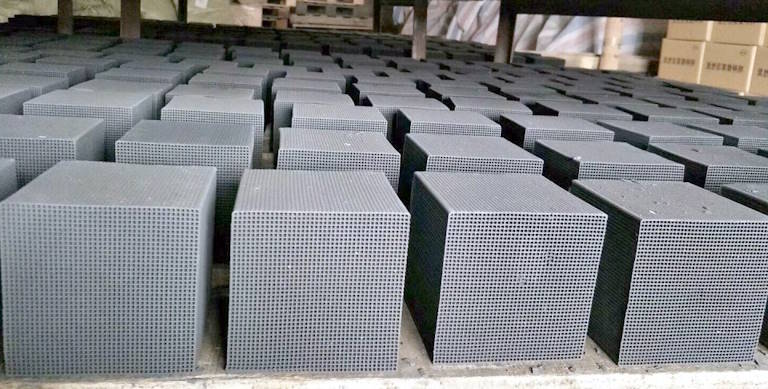
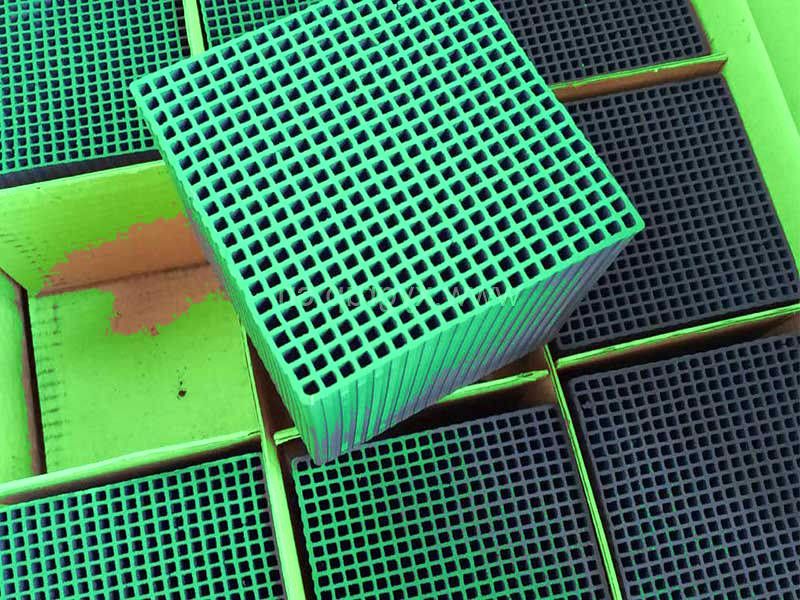
Cellular activated carbon is a type of cast activated carbon . It is not manufactured as granules or powder, but as blocks with regular hexagonal or square channels . This structure ensures a uniform air or gas flow with effective adsorption of pollutants.
This type of activated carbon is widely used in air purification systems, odor control, chemical plants, the paint and resin industries, printing, industrial wastewater treatment, and factory ventilation . This article provides a comprehensive and search engine optimized introduction to honeycomb activated carbon.
What is honeycomb-shaped activated carbon?
Activated carbon, a honeycomb-shaped, porous absorbent material with an extremely large specific surface area, is produced from carbon-containing materials such as charcoal, coconut shells, asphalt, or organic carbon compounds . After activation, the material forms numerous microscopic pores that can absorb pollutant particles.
Unlike granulated or powdered activated carbon, cellular activated carbon is manufactured from regular blocks with channels . This design offers the following advantages:
- Lowering low blood pressure
- Improve air circulation
- Create a more efficient contact surface.
- This simplifies the installation and maintenance processes.
- Ideal for industrial air purification systems.
In fact, this product combines high surface absorption with a specially developed design , enabling it to effectively remove both chemical and physical contaminants.
What is the structure of honeycomb-shaped activated carbon?
The most distinctive feature of this product is its regular honeycomb structure . This structure contains internal channels that ensure unimpeded air or gas flow. Typically, this structure consists of porous carbon materials with the following properties:
- High porosity
- large contact area
- Good mechanical strength
- Good liquidity
- Relative resistance to heat and humidity.
That’s all.
Cell density and size vary depending on the application. The larger the specific surface area and porosity, the better the absorption capacity. In industrial design, it is of course crucial to find a balanced relationship between absorption capacity, pressure drop, and mechanical strength .
What is the operating principle of honeycomb-shaped activated carbon?
This carbon material works on the principle of surface adsorption . This means that pollutant particles in the air or gas are adsorbed onto the inner surface of the carbon pores as they flow through the channel and are thus removed from the airflow.
This method is generally effective in removing the following substances:
- unpleasant odor
- Solvent vapors
- Volatile organic gases
- Sulfur compounds
- Some chemical pollutants
- Smoke and light industrial gases
The secret lies in the fact that activated carbon, with its honeycomb structure, does not break down pollutants , but rather absorbs and stores them. Once saturated, it must therefore be replaced or replenished.
Advantages of honeycomb-shaped activated carbon
The use of honeycomb-structured activated carbon offers a number of advantages that differentiate it from other absorption materials.
1. Large contact area
Due to its regular and porous structure, the product has a very large effective contact area and high efficiency in pollutant absorption.
2. Low voltage drop
The air circulates through a conventional duct system, which helps to maintain low pressure in the system; this is crucial in industrial ventilation.
3. Easy installation
This product is usually used in the form of individual elements or blocks and is relatively easy to assemble.
4. Suitable for high flow rates.
Honeycomb-shaped activated carbon achieves good results in systems with high airflow.
5. Removes odors and volatile organic compounds.
This activated carbon is particularly effective in removing odors, organic vapors and volatile compounds .
6. Appropriate weight
Compared to other, heavier support structures, their weight is easier to manage and control during system planning.
7. Wide range of industrial applications.
It is widely used in various industries, from air purification and pollution control to chemical filters.
Disadvantages and limitations
Every product has its limitations. Even though honeycomb-shaped activated carbon has its advantages, it is not without disadvantages:
- Absorption efficiency can decrease at high humidity levels .
- For some gases, you have to select a specific type.
- It should be replaced as soon as it becomes saturated with moisture.
- If the system is not designed correctly, some of the air may pass through without being effectively connected to it.
- Its effectiveness is limited at extremely high temperatures.
Therefore, product selection must be made correctly based on the type of pollutant, the air flow rate, the temperature, the humidity, and the exposure time.
Application of activated carbon in the form of honeycombs.
1. Industrial air purification
One of the most important applications of this device is the removal of pollutants from industrial exhaust gases. These pollutants include chemical fumes, unpleasant odors, and organic gases.
2. Odor control in wastewater treatment plants
Hydrogen sulfide, ammonia, and organic compounds cause unpleasant odors in municipal and industrial wastewater treatment plants. Cellular activated carbon is highly effective in eliminating these odors.
3. Production of paints, resins and solvents.
This carbon is ideally suited for absorbing vapors in factories that produce paints, solvents, acetone, toluene, xylene and other solvents.
4. Printing and packaging industry
The use of this type of activated carbon can significantly reduce the odor of printing inks, solvents, and chemicals used in printing.
5. Oil refineries and chemical industry
In some chemical plants, this substance is used to absorb harmful gases and to control odor emissions.
6. Production workshops and warehouses
In enclosed spaces where chemical odors or fumes accumulate, installing an activated carbon honeycomb filter can be very effective.
7. Air conditioning
In industrial air conditioning and ventilation systems, this product is used in the final stage to eliminate odors and gases.
The difference between honeycomb activated carbon and granular activated carbon.
Many buyers want to know the difference between cellular and granular activated carbon. The main differences lie in their shape, flow pattern, and pressure drop .
molecular carbon
- Its shape resembles a grain of wheat.
- More suitable for fixed bed filters and certain liquid systems.
- An even more significant drop in pressure may occur.
- Some types of work at height require special structures.
Carbon honeycomb
- It contains structures and channels in the form of blocks.
- Ideal for air and gas ducts.
- Lowering low blood pressure
- It effectively removes odors and VOCs even at high flow rates.
short:
- If your goal is to purify air and gases , then honeycomb activated carbon is a good option.
- When it comes to water purification , granulated or powdered activated carbon is generally more effective.
In which industries and under which conditions is honeycomb-shaped activated carbon most effective?
This product is most effective in the following cases:
- Normal airflow
- Average pollutant concentration
- Requirements for low voltage
- Requirements for the elimination of odors and volatile organic compounds.
- Industrial ventilation systems in confined spaces
- It requires quick installation and easy maintenance.
But in the following cases:
- The humidity is very high.
- High temperature
- High concentration of corrosive gases
- The particle concentration was extremely high and no pre-filter was installed.
To extend the service life of carbon materials, suitable integrated pretreatment and design methods must be applied.
Technical properties of activated carbon in honeycomb form.
When purchasing this product, pay attention to the technical specifications. Key features include:
- Carbon-containing materials
- Unit size
- Cell size
- Special level
- apparent density
- compressive strength
- Thermal resistance
- Ash content
- humidity
- Absorption capacity of volatile organic compounds
- Acceptable low blood pressure
If the product is intended for industrial applications, this data should be carefully reviewed. Selecting a product solely based on price can lead to lower efficiency and higher maintenance costs in the long run.
Instructions for assembling activated carbon in honeycomb form.
Proper installation of this product is essential for its full functionality. Important installation points are:
- Suitable pre-filter: Dust particles and solid contaminants must be removed as much as possible before the carbonization process.
- Uniform airflow distribution: If the air flows over only part of the surface, efficiency decreases.
- The filter housing is sealed. Some air can pass through air leaks without coming into contact with the carbon filter.
- Note the direction of water flow. Some designs have a predetermined channel direction; installation should be carried out according to the manufacturer’s instructions.
- Temperature and humidity control: The ambient conditions must be within the operating range of the product.
- Regular checks are necessary to detect pressure losses, exhaust odors, and carbon deposits.
How long does honeycomb-shaped activated carbon last?
The lifespan of this product depends on various factors, including:
- Concentration of pollutants
- Dubai Air
- Temperature and humidity
- Types of gases or odors
- Structural properties of carbon fibers
- Pre-filters are included.
- System availability
In industrial environments, their lifespan ranges from several months to several years. In heavily polluted environments, the replacement cycle is shorter. The best way to determine when to replace them is by checking exhaust gases for reduced performance and the presence of unpleasant odors, as well as through regular inspections.
Is honeycomb activated carbon a renewable resource?
In some cases, the answer is yes; however, recycling this type of carbon is not always economically or practically feasible. Recycling can be done in the following ways:
- hot
- steam
- chemicals
This is possible, but depends on the type of absorbed pollutant and the product structure. In many common applications, replacing the absorbene is simpler and more reliable.
If the material absorbs harmful, sticky, or corrosive contaminants, recycling may not be practical. Therefore, the decision for or against recycling should be based on operating conditions and costs.
What factors influence the price of honeycomb activated carbon?
The price of this product is not fixed, but depends on several factors:
- Quality of raw materials
- Brands and countries of origin
- Size and thickness of the mass
- Porosity and absorption
- Mechanical resistance
- Types of industrial applications
- Order in bulk or individually.
- Transport and import costs
Products with high absorption capacity and durability are generally more expensive. However, when purchasing industrial products, you should always consider the total cost of ownership , not just the initial purchase price. Cheap products with low durability ultimately increase the overall cost of the project.
Important points to consider when buying honeycomb-shaped activated carbon.
If you are planning to purchase this product, please check the following:
1. Types of pollutants
Identify the absorption targets: odors, volatile organic compounds, chemical vapors, or specific gases.
2. Airflow
The amount of air flowing through the device must be proportional to the carbon storage capacity.
3. Humidity and temperature
These two factors have a significant impact on performance.
4. Filter size and design
The installation site and the supporting structure must correspond to the dimensions of the blocks.
5. Quality of work
Porosity, strength, and structural homogeneity are extremely important factors.
6. Customer Service
Technical support is of great importance in industrial projects.
7. Stable inventory levels and stocks.
If you need to take medication regularly, it is extremely important to have a constant supply of that medication.
Common mistakes when using activated carbon honeycomb.
Several common errors can lead to reduced system performance:
- Incorrect choice of carbon type
- No pre-filter is required during installation.
- Don’t pay attention to the humidity.
- The liquid surrounds the medium instead of penetrating it.
- Use of inferior products
- Delay in the exchange of saturated carbons
- Inadequate design of the ventilation system
Avoiding these problems can extend the lifespan of your system and improve its efficiency.

How effective is activated carbon honeycomb material at odor removal?
One of the main reasons for the popularity of this product is its excellent odor-neutralizing properties . Many synthetic odors are caused by organic compounds and sulfides, which are easily absorbed by the porous surface of activated carbon.
Of course, the following should be taken into account:
- Intense smell
- airflow velocity
- humidity
- Contact time
- Concentration of pollutants
These elements play a crucial role in the system’s efficiency. Therefore, with proper design, the system can significantly reduce odors and improve exhaust gas quality.
The role of cellular carbon in reducing emissions of volatile organic compounds.
Volatile organic compounds (VOCs) are among the most important industrial pollutants. They are found in paints, resins, solvents, industrial cleaners, and many manufacturing processes.
Due to its large specific surface area, cellular activated carbon is one of the best options for absorbing volatile organic compounds (VOCs) . In many plants, this product is frequently used in combination with other equipment, such as:
- washing machine
- Pre-candidate
- industrial fans
- Particle filter
It serves to improve the system for combating environmental pollution.
Comparison of honeycomb-shaped activated carbon with other absorption materials.
Compared to washing machines
- This processing plant is best suited for dissolved gases and acidic gases.
- Activated carbon with a honeycomb structure is more effective at removing odors and VOCs.
- In many systems, these two elements complement each other.
Compared to textile filters
- This filter is a fabric used to filter out solid particles.
- Carbon is like a beehive in terms of gases and odors.
Compared to powdered carbon
- Activated carbon powder can be used for liquids and for calibration.
- The carbon honeycomb structure offers superior performance in air and gas.
Is honeycomb-shaped activated carbon also used for water treatment?
This product is primarily intended for air and gas purification , not water purification. Granulated or powdered activated carbon is typically used for water purification, as the required flow rates and contact times in water treatment plants differ from those in water purification.
Certain types of activated carbon can be used in a range of industrial applications. However, if your goal is water purification, you should select your filter material with particular care.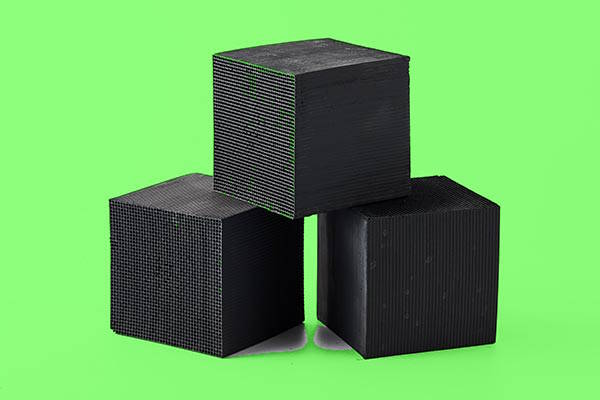
Maintenance methods using honeycomb-shaped activated carbon.
To extend the service life and maintain efficiency, please observe the following points:
- Avoid letting too much dust get inside.
- Regular check-ups for low blood pressure
- Ambient humidity control
- Avoid contact with unsuitable corrosive substances.
- Carry out the exchange promptly.
- Use a pre-filter system.
In addition to extending the service life of the filter media, proper maintenance also enables the operation of ventilation or cleaning systems with lower energy consumption.
In conclusion
Cellular activated carbon is among the most effective and practical absorbents for air purification, odor removal, and the absorption of volatile organic compounds. Its uniform structure, low pressure, large surface area, and ability to operate at high flow rates make it an ideal choice for many industries.
If we wanted to define a sentence, we would say:
Cellular activated carbon is an absorbent material that has been developed and is widely used for air purification and the control of industrial gases.
When selecting the right product, it is crucial to carefully consider the type of pollutant, airflow, humidity, temperature, and installation conditions. The quality of the installation and the supplier’s service also significantly influence the final result.
Frequently asked questions about cellular activated charcoal
1. What are the applications of honeycomb-shaped activated carbon?
It is suitable for air purification, odor removal, VOC absorption and control of gaseous pollutants in various industries.
2. Can this type of carbon also be used for water purification?
Generally no; granular or powdered activated carbon is more commonly used in water treatment.
3. What is the lifespan of carbon fibers?
The duration varies depending on working conditions and ranges from several months to several years.
4. Is recovery possible?
In some cases this is possible, but an exchange is usually cheaper and easier.
5. Which industries use it most frequently?
Paints, resins, printing industry, wastewater treatment, industrial ventilation and chemical industry.