Surface adsorption and its applications in industry and environmental protection
1.3 Particle size and shape of commercial activated carbons
Commercial activated carbons are produced in different forms. Therefore, they are classified into powder, granule, and shaped based on their particle size and shape.
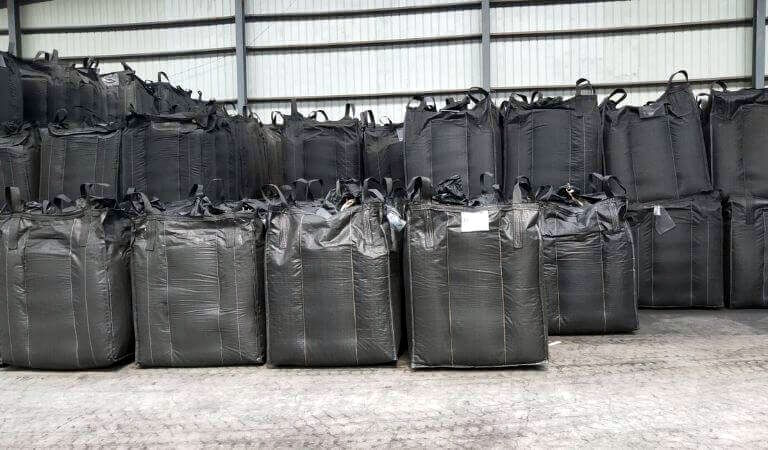
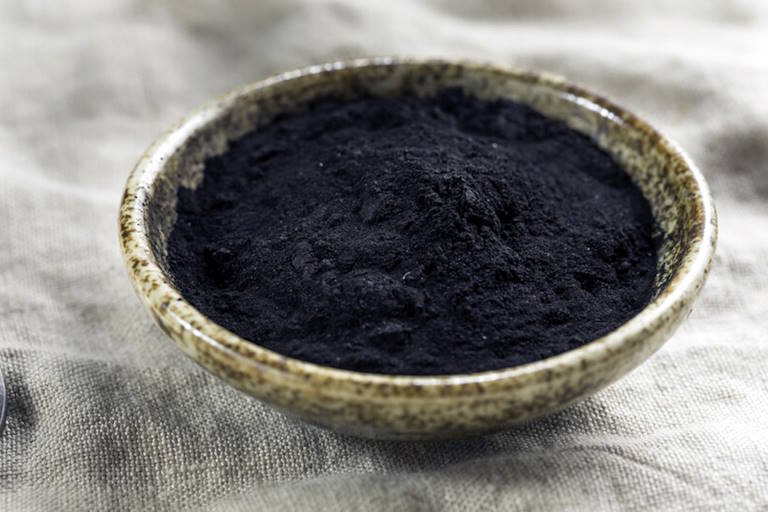
Powdered activated carbons (PACs) have a very small particle size (typically less than 100 μm in diameter). Their advantage over large particles is that there is less diffusion resistance to adsorption and hence a much higher adsorption rate is achieved. Powdered carbons are usually prepared by chemical activation from sawdust. They are preferably used for adsorption from the liquid phase and their application is simple. The PAC is added directly to the solution, stirred, left in contact for a short time and subsequently separated by filtration.
Granular activated carbons (GAC) have a relatively larger particle size compared to PAC and thus have a smaller external surface area. Therefore, the diffusion of adsorbed materials is an important factor. Although granular or formed carbons are more expensive than powdered carbons, they may be more economical if the utilization rate is high, as they can be regenerated and reused. Granular or formed carbons are more desirable for continuous or cyclic processing in fixed bed operations . The pressure drop across the bed can be controlled by adjusting the particle size distribution. The grain size is selected depending on the height of the bed used. GACs can be prepared by physical activation methods using a variety of raw materials such as bituminous coal, sub-bituminous coal, petroleum coke, and peat.
Extruded activated carbons are obtained by pre-mixing carbonaceous raw materials with a binding agent, usually wood or coal tar or other earth. However, attempts have been made to use resins, petroleum products or other binding agents for this purpose. The granulation process involves preparing a paste consisting of finely ground coal dust and tar, extruding the granules and drying. The most common method of producing cylindrical granules involves extruding a plastic paste including a coal binding agent through a nozzle. The resulting strands are cut into cylindrical granules of the required dimensions. The granules formed are carbonized after drying. Many methods have been developed for granulating activated carbons, which allow the production of spherical granules. Such granules have significant advantages over cylindrical or irregular granules, the latter being particularly susceptible to collapse or abrasion.
Processes to reduce the environmental impact of fabric finishing
2.3.6 Powdered activated carbon treatment
Toxic and hard compounds in wastewater can be adsorbed using activated carbon. Powdered activated carbon (PAC) treatment is mainly used to remove persistent organic compounds (such as pesticides and biocides) and organic compounds (such as AOX, BTEX, MAH, and PAHs). In this PAC treatment, the biological degradation process occurs undisturbed and with a change in the permeate composition. PAC is dosed into the aeration tank. The optimum is determined through experimentation. As the sludge amounts increase during the process, an additional sludge treatment system may be required. Since the residence time of the added activated carbon depends on the age of the sludge in the system, the PAC process is difficult to control.
The presence of PAC improves sludge settling. The more activated carbon added, the more sludge is produced. Care should be taken regarding dust formation. One disadvantage is the color (black precipitate). The presence of activated carbon can affect the possibility of excess sludge removal.
The science of interface in drinking water purification
2.4.1. Powdered activated carbon
Powdered activated carbon (PAC) can be added before coagulation, during chemical addition, or in the settling stage, before sand filtration. In the former case it is removed from the water during the coagulation process, and in the latter case via filtration. As the name suggests, PAC is in the form of particles, with particle sizes typically between 10 and 100 micrometers in diameter. One advantage of PAC is that it can be applied for short periods when problems arise, then stopped when it is no longer needed. With problems that may only arise periodically, such as algal toxins or taste and odor, this can be a major cost advantage. A disadvantage of PAC is that it cannot currently be reused and is disposed of with the treatment sludge or backwash water.
Production and performance of activated carbon from rice husk for removal of natural organic matter from water: A review.
9.1 Powdered activated carbon
Powdered activated carbon is typically composed of particles with a diameter of 10–100 μm (Newcombe, 2006). This type of activated carbon is not well developed because properties such as density, hardness, and wear index are usually low. The cost of PAC production is usually minimized because it is usually discarded after use (Parsons et al., 2014). PAC is often used to remove NOM in drinking water, which causes odor and taste (Carrière et al., 2009), but it is ineffective in removing DBP precursors (Carrière et al., 2009). PAC can be applied at various stages of water treatment, including before coagulation, during chemical addition, or in the sedimentation stage before sand filtration (Newcombe, 2006). However, its use presents some practical difficulties due to the need to separate PAC from the water after use (Gupta et al., 2009). According to Newcomb (2006), PAC applied before or during coagulation can be removed from the water during the coagulation process, while PAC applied in the settling phase before sand filtration can be removed by filtration. However, studies have shown that the application of PAC before coagulation results in increased NOM removal compared to when PAC and coagulation are applied simultaneously (Duane et al., 2003; Tomaszewska et al., 2004). When the NOM concentration is reduced by PAC adsorption, this also reduces the coagulant dosage. On the other hand, the application of PAC after coagulation (or in the settling phase before sand filtration) results in increased turbidity because the PAC is not incorporated into the flocs. PAC can also be applied alone without coagulation, although the NOM removal efficiency is as low as 4–75% (Uyak et al., 2007). Overall, the combined application of chemical coagulation with PAC may be a more cost-effective alternative than chemical coagulation alone to meet the requirements of Stage 1 of the Disinfectants/DBP Act (Najm et al., 1998).

From a literature review, it was found that very few adsorption studies have been conducted on NOM removal using powdered activated carbon derived from rice husk.
Among these, we can mention the studies of El-demerdash et al. (2015) who studied the removal of NOM and THM using powdered activated carbon from rice husk. In their findings, the removal of NOM ranged from 9.7 to 76.1%, while the removal of THM ranged from 12.0 to 58.8% depending on the dose of activated carbon in mg L -1 . Kalderis et al. (2008a) investigated the adsorption of humic acids on PAC derived from rice husk. The maximum loading of 11.59 mg humic acid per gram of activated carbon was obtained. The authors attributed the low maximum loading to the microporosity and low Fe 2 O 3 and CaO content of the rice husk activated carbon. This is consistent with the findings of Daifullah et al. (2004), who reported that rice husk activated carbons with higher mesoporousity had a 20% greater humic acid adsorption capacity than carbons with lower mesoporousity. It has also been reported that the presence of acidic oxides such as SiO2 and P2O5 ( commonly present in ash) on the carbon surface increased the adsorption of humic acids by lowering the pH of the solution (Daifullah et al., 2004). Diamadopoulos et al. (1992) found that ashless activated carbons had a lower adsorption capacity for fulvic acids. In their study, activated carbons with a surface area of more than 1000 m2/ g -1 had a significantly lower adsorption capacity for fulvic acids compared to activated carbons with high ash content and a surface area of less than 300 m2/g – 1 . The authors attributed the increase in the adsorption capacity of fulvic acids with increasing ash content of activated carbon to the ability of fulvic acid to interact with metal oxides and metal ions that constitute a significant portion of the ash. These findings indicate that the presence of ash in rice husk activated carbon can have a significant effect on NOM removal from water. Table 8 shows previous studies on the NOM removal efficiency of rice husk-derived activated carbon compared to commercial activated carbon and other low-cost adsorbents.
Table 8. Summary of NOM removal efficiency by rice husk activated carbon, compared to commercial activated carbon and other low-cost adsorbents.
| Absorbent | NAME/NAME/DBP deduction | Removal efficiency (%) | Referral |
|---|---|---|---|
| PAC from rice husk | Name | 9.7-76.10 | Al-Damardash et al. (2015) |
| Commercial PAC only | Name | 71.20 | Joseph et al. (2012) |
| PAC from rice husk | Trihalomethane | 12-58.8 | Al-Damardash et al. (2015) |
| Alum + Commercial PAC | Name | 19-92.0 | Joseph et al. (2012) |
| FeCl 3 + PAC commercial | Name | 2.5-84.0 | Joseph et al. (2012) |
| PAC Coconut Palm | DOC | 77.00 | Ribave Teixeira et al. (2017) |
| Bituminous coal based GAC | THMFP | >85.00 | Iriarte-Velasco et al. (2008) |
| Commercial activated carbon | TOC | 42-45.00 | Lokkonen et al. (2014) |
| Commercial activated carbon | DOC | 58-68.00 | Lokkonen et al. (2014) |
| Rice husk activated carbon | COD | 70.00 | Kalderis et al. (2008a,b) |
Note: THMFP is the potential for trihalomethane formation.
From the data shown in Table 8, the NOM removal efficiency of rice husk-derived activated carbon compares well with that obtained from the application of commercial activated carbon. Therefore, rice husk-derived activated carbon can serve as a potential alternative to costly commercial activated carbon. However, it is still necessary to place both rice husk-derived activated carbon and commercial activated carbon under completely similar water conditions to obtain a better comparison between the two adsorbents.
Oily wastewater treatment
Shahriar Jafarinejad, in Oil Waste Treatment and Pollution Control , 2017
6.4.3.1.2 Activated sludge treatment with powdered activated carbon
Activated carbon (both powdered activated carbon (PAC) and granular activated carbon (GAC)) has long been used in water and wastewater treatment due to its large surface area for adsorption ( Tri, 2002; Jafarinejad, 2015e ). Powdered activated carbon has a diameter of less than 200 mesh ( Tri, 2002 ). Activated sludge treatment with PAC is similar to the conventional AS process, but in this process, PAC is added to the aeration tank or mixed liquor. Pollutant removal is achieved and enhanced by a combination of biodegradation and adsorption ( Tri, 2002; IPIECA, 2010 ). A schematic of a typical powdered activated carbon treatment (PACT) process is shown in Figure 6.6 . Most of the PAC is recycled with the activated sludge, but the system requires continuous incorporation of fresh carbon.The PACT process is generally used for petroleum industry wastewater where stringent standards for specific pollutants must be met (IPIECA, 2010). According to Tri (2002), the PACT process can generally remove organic compounds more effectively than would be expected from biodegradation or adsorption alone. The PAC dosage and the suspended solids concentration – mixed liquor – PAC – are related to the sludge age as follows:
Figure 6.6 . Schematic of a typical powdered activated carbon treatment (PACT) process.
Modified from IPIECA, 2010. Water and Wastewater Treatment Use and Management. IPIECA Operations Best Practice Series, London, UK.
where Xp is the equilibrium PAC MLSS content (mg/L), Xi represents the PAC dosage (mg/L), θc is the solid retention time (d), and θ represents the hydraulic retention time (HRT) ( d ) . The carbon dosage is usually between 20 and 200 mg/L. The organic removal per unit carbon increases with increasing sludge age, which improves the process efficiency (Tri, 2002).
Membrane aging during water treatment
Powdered activated carbon challenge test
An alternative that mitigates the disadvantages of the microbial challenge test is the powdered activated carbon (PAC) challenge test. This is based on the same principle as its microbial counterpart, the only difference being that controlled doses of PAC are introduced into the system instead of bacteriophage or spore surrogate. The particle size of the PAC must be in the same size range as Giardia and Cryptosporidium in order to mimic the microbes (Van Hoof, Bruns, Nahrstedt, Panglisch, & Gimbel, 2003). This method relies on a particle counter and therefore suffers from the drawbacks of particle counting. Furthermore, the sensitivity of the test is greatly influenced by the size distribution of the PAC particles and can lead to membrane fouling if not properly monitored.
Strategies for enhancing micropollutant removal from wastewater by membrane bioreactors: Recent advances and future prospects
4.2 External additives for biological and membrane performance enhancement
Several additives can be added directly to the bioreactor to enhance biological treatment and reduce membrane fouling, thereby improving the overall performance of the MBR for wastewater treatment. Common additives include activated carbon, biochar, biocarriers, and microbial inoculants. Powdered activated carbon (PAC) is a widely used adsorbent to provide high specific surface area to enhance micropollutant removal through direct adsorption and enhanced biodegradation by biofilm formation (Gutierrez et al., 2021). Asif et al. (2020b) added 20 g/L PAC to the MBR and observed that the overall removal of all eight micropollutants increased by 10–40% compared to a control system. Activated carbon can also be granular and used as the fluid medium in the MBR. Lim et al. (2019) developed a single-stage anaerobic fluidized bed MBR using GAC for the complete removal of diclofenac, ibuprofen, and sulfamethoxazole in low-strength synthetic wastewater. The increased removal of these micropollutants can be attributed to their adsorption on GAC and increased biodegradation by the formed biofilm.
Biochar and other biocarriers have recently been used to improve MBR performance in an effort to reduce the cost of activated carbon. Biochar is a microporous carbon material and can act as an adsorbent or biocarrier to support microbial growth for further removal of contaminants in biological processes. Cheng et al. (2021) introduced 0.5 g/L pomelo peel-derived biochar into an anaerobic MBR to increase the removal of sulfadiazine and sulfamethoxazole by more than 30%. In addition, Yu et al. (2018) showed that the genus Thermomonas can be effectively enriched in MBRs with sponge plastic biocarriers to increase the removal of sulfadiazine and sulfamethoxazole by 15 and 17%, respectively. It is noteworthy that biological treatment can be directly enhanced by inoculating microbial reagents to develop biological MBRs. For example, Aydin and Ken (2020) added Pyophage cocktail with 3 × 10⁸ plaque forming units/mL in MBR to increase sludge metabolism and adsorption, resulting in erythromycin and sulfamethoxazole removal by up to 99%.
These carbon additives and biocarriers are also effective in controlling membrane fouling to maintain MBR performance. Cheng et al. (2021) showed that biochar addition can reduce membrane pressure rise by adsorbing SMP and EPS in the sludge and extend the membrane fouling cycle from 12 days to 19 days. However, the dosages of these additives should be well adjusted for the treatment of different waste streams to reduce operating cost and prevent membrane damage. Akram and Stuckey (2008) reported that increasing the PAC addition from 1.6 to 3.4 g/L can increase the viscosity of the mixed liquor to reduce the membrane flux by 44%. (Son et al., 2021).
The science of interface in drinking water purification
2.4. Application of activated carbon for drinking water purification
Two forms of activated carbon are commonly used in drinking water purification: powdered activated carbon and granular activated carbon.
2.4.1. Powdered activated carbon
Powdered activated carbon (PAC) can be added before coagulation, during chemical addition, or in the settling stage, before sand filtration. In the former case it is removed from the water during the coagulation process, and in the latter case via filtration. As the name suggests, PAC is in the form of particles, with particle sizes typically between 10 and 100 micrometers in diameter. One advantage of PAC is that it can be applied for short periods when problems arise, then stopped when it is no longer needed. With problems that may only arise periodically, such as algal toxins or taste and odor, this can be a major cost advantage. A disadvantage of PAC is that it cannot currently be reused and is disposed of with the treatment sludge or backwash water.
2.4.2. Granular activated carbon
Granular activated carbon (GAC) is widely used in Europe and the United States to remove micropollutants such as pesticides, industrial chemicals and taste and odor. It is also increasingly used in Australia, particularly for taste and odor removal and to provide insurance against the potential for toxic algal blooms in water supplies. The particle size is larger than PAC, typically between 0.4 and 2.5 mm. Granular activated carbon is generally used as a final finishing step, after conventional treatment and before disinfection. The advantages of GAC are that it provides a permanent barrier against unexpected episodes of water source contamination, and the large mass of carbon provides a very large surface area. The disadvantages are that it has a limited lifespan and must be replaced or regenerated when its performance is no longer sufficient to provide high-quality drinking water. Regular replacement of GAC results in high ongoing treatment costs. The regeneration process involves heating the carbon to very high temperatures to vaporize the adsorbed compounds.Costs associated with this process include the capital costs of establishing a reclamation facility, or transportation to an existing facility, energy costs, and the loss of some GAC through erosion.
Filtration through GAC is often used in conjunction with ozone. When used in conjunction with ozone it is sometimes called BAC or biologically activated carbon. However, this is a misnomer as all GAC filters will function as biological filters within a few weeks to months of being put into operation.
“Tailpipe” fugitive solvent emission treatment.
John B. Durkee II, in Cleaning with Solvents: Methods and Machinery , 2014
4.3 Characteristics of an activated carbon adsorbent
Activated carbon is a global product E , F. There is a real world of substrates G , H that are damaged products and can be converted to carbon and then activated through various processes.
The reason for this abundance is that there is a real world of applications for activated carbon. These include the removal of at least H2S , SO2 , NOX , HCN, HCOH (formaldehyde), NH3 , mercury, and CO2 from large volumes of waste air streams such as emissions from power plants or refineries, as well as the control ofGreenhouse gas emissions from cleaning operations. In addition to applications involving air purification with GAC, there are likely to be further applications for water purification using PAC.
Each of the adsorption applications mentioned above is best performed with a different activated adsorbent. One can choose from a product with different: smallest pore diameter, pore size and volume distribution, total surface area per volumetric load 8 . And, in particular, the activation method I .
For the user, this is good news. There are many capable, experienced and competitive suppliers of activated carbon 9. There is no reason to work with a company that does not seem to be one.
The bad news is that the preparation, use and recovery of activated carbon is a business worth at least $4 billion globally – and the amount spent on solvent reclamation or recovery from or for cleaning operations is negligible in that business volume.
To the extent that vapor diffusion treatment is used to recover solvents on a commercial scale, it is (or has been) associated with greenhouse gas emissions from gas stations – particularly in California, the recovery of solvents used in the tape industry (sealing tape) gravure printing and cellulosic packaging for cigarettes.
The bulk of the global activated carbon trade is to remove chloramine from water to make it suitable for drinking.